Grumpy dinner

Tonight I made a fabulous meal for my precious family. Anthony has started taking a maintenance med for his gout, so we’re trying to get a little red meat back on the menu. Jesse and I tend to be a little anemic without red meat. What can I say; cow calls to us.

I got a flank steak and cooked it in a style that should satisfy both my Korean and Anthony’s English heritages: I boiled it madly for two hours.

That’s where the cultural overlap ends. I shredded and seasoned the meat with sesame and red pepper flakes and garlic (I did a small separate batch for the kids, in which I replaced the red pepper with a little brown sugar and soy sauce). I reduced the broth a bit for flavor, and added some tofu and thin-sliced carrots and onions and garlic. I served it with rice and seaweed and home-made kimchi.

Am I the BOMB?

img_2946

img_2948

What could be more nutritious and delicious than this meal?

If you read my blog regularly, you know what’s coming next:

Nick was super hungry after school, so while that blessed meat was boiling away, he ate two full bagels loaded with cream cheese. He wasn’t even remotely hungry by the time we sat down to dinner.

But Anthony was in English-mother mode, grumpy about Nick never being able to sit still at meals and never eating what I cook. So he ordered Nick to the table and required him to eat some meat. Nick choked the first bite down and then required catsup. I think he also ate the tofu out of his soup. I considered the meal a success because he didn’t gag and vomit.

As the struggle to eat commenced, Anthony and I became weirdly irate about Nick’s inability to stay in his chair, so I grabbed my phone and set a timer for three minutes. Could Nick stay in his chair for three minutes??

No, we discovered. He could not.

Meanwhile, during our dinner battle with Nick, Jesse was sitting on the sofa refusing to come to the table. There was much whining associated with this problem.

“Jesse, can you please just come to the table and not make us ask again, so this doesn’t turn into another fight with you?”

Jesse put up a silent front, but eventually relented in the face of parental whining. She sat down, poured water on her rice, and quickly ate it with a fork. I did not know you could eat rice-in-water (a Korean comfort food, “muhl-bahp”) with a fork. I think we’ve discovered another one of Jesse’s odd talents.

Jesse eyed the meat suspiciously and ate a tiny bite. She picked the tofu out of her soup. And that was it.

As she ate, Nick (now departed from the kitchen) started wandering in with ziplock bags full of Christmas ornaments, which he placed all over our meal. Our settled plan (in my mind anyway) was to decorate the tree after dinner, but he was becoming impatient. We ordered him repeatedly to get out of the kitchen and take the ornaments with him, to no avail. He was frenetic; he just kept bringing those ornaments in.

Not long after her arrival at the dinner table, Jesse got up and left. I called her back.

“I made this special nutritious soup for you,” I wheedled, “to help you recover from all your sicknesses. It is full of good things to make you strong and healthy. Just pick up the bowl and slurp it.”

Gaaaaawd. I sounded just like my grandma and mom. I sounded like a crazy Korean lady pushing and pushing and pushing her totally amazing and to-die-for food on her kids. I rolled my eyes at myself, just as I used to roll them at my maternal forebears.

* * * * *

We survived dinner, mostly uneaten. We decorated the tree, and each child only broke one ornament. We had hot cocoa loaded with marshmallows and whipped cream. We washed dishes. The kids could not have cared less about my nutritious dinner. But my tummy and heart were happy after all.


Snow day Sunday

I wake up this morning and the snow is just starting to fall. I can barely see it, but there’s a haze of white on the ground in small patches, and that winter feel is in the air.

Our plan is to put up the Christmas tree and decorate it today. But first Anthony says we have to disappear the leaf pile that’s in the middle of our back yard. It’s a mighty big leaf pile, so this is going to be a lot of work. Anthony heads out first and I follow, leaving the kids to relax on the sofa with their iPads. While we rake and carry leaves into the woods, we start to hear some high-pitched noises. I think at first that it’s a neighborhood dog. Anthony disagrees.

“I think that’s Nick.”

We stand still for a moment and realize Anthony is right. We can see Nick standing in the living room. We can hear him screaming on and on. Anthony and I stand frozen, staring up at the living room window.

Anthony breaks down first. “Should I go in?”

I don’t offer to go instead.

Anthony disappears into the house and I get back to work. It feels like half an hour passes before I hear someone stomping out to me. I expect to see Anthony but instead it’s Jesse, looking freshly showered.

We sit on a couple stumps side by side.

“Was that Nick screaming earlier?”

“Yeah.”

“Wanna tell me what happened?”

Jesse gives me the blow-by-blow in an unemotional, matter-of-fact tone, the way you might expect to hear a beat cop presenting facts. “I was kind of teasing Nick on his iPad. Then he started yelling at me. I punched him in the eye. He pulled a bunch of hair out of my head. He kept screaming at me even when I said I was sorry, and I didn’t do anything more to him. Then he coughed on me and vomited snot on top of my head. So I took a shower.”

I let all that sink in for a while as we sit peacefully under the trees.

I remind Jesse that until just a few months ago, she was often really hostile toward Nick. Sometimes she still is. She would punch him in the car when we drove places, cough in his face, spit on him, stick her bare feet on his face. Nick is a patient kid, but he has his limits too. I remind her that when she was really down, we asked Nick to be patient and tolerant, because we were all just waiting for Jesse to feel better. Now I tell Jesse the same thing, as snow lands softly around us.  You need to give Nick time to forgive you for those long months. You can be tolerant and patient, just like he was.

Jesse nods in quiet acceptance. I can’t see even a trace of anger or resentment in her.

* * * * *

Everyone ends up outside for a little bit to finish up the leaf pile and take turns on the rope swing, and then we all head in. We’re still thinking about the Christmas tree, but also we’re feeling lazy. Jesse wants to play Monopoly, which she insists on pronouncing “mono” like the virus and “poly” like a roly-poly. Emphasis on “MO” and “PO.”

Anthony and I used to enjoy playing a variety of board games, but then our children were born. I keep hearing stories about how people have fun playing board games with their very young children, and I have to assume these tales are apocryphal. In our house, pulling out a board game is the equivalent of saying, “I’d like my life to suck for the next 15 to 20 minutes until we give up and put this damn game away again.”

But Anthony and I say yes and make Jesse set up the board. Last week when she asked to play, we tried to set it up for her and she went straight to Anxiety Land, tic’ing and twitching and doing lots of annoying things. So this time we let her habituate to all the pieces in her own way while we hang out in the kitchen. It works. We play fast-version, passing out all the property deeds first. Anthony makes a bunch of trades with Jesse straight away, excluding me entirely. He claims he’s being really, really fair. He ends up with two monopoly sets and all four railroads and something like thirteen properties. Jesse ends up with two monopoly sets and eight properties. I get bupkis, because no one is trading with me, and I start whining. Anthony always beats me at Monopoly.

The dice begin to roll in earnest, and the game doesn’t suck this time. Nick is the banker. Jesse takes forever to count out money when she needs to pay up, while Anthony and I stare silently at each other in grim solidarity. Nick runs around and around the table grabbing random things, moving houses here and there, and sneaking money to Jesse. About fifteen minutes in, attention spans have faltered and we leave the board on the table to finish the game later. Jesse wanders over to the sofa, covers herself entirely with a blanket, and promptly falls asleep.

* * * * *

Jesse’s still experiencing random bouts of extreme fatigue every day. We hope it’s the fallout of Lyme disease and that it’ll clear up some time in the next decade or two. I guess it’s possible that it’s something else. Her new meds? Depression? An as-yet-undiagnosed fatigue-inducing illness? Ennui?

Nothing I can do about it today, so Nick and I abandon Jesse and Anthony. Nick’s snow shoes are too small, so I need to take him shopping. As we prepare to leave, he harangues me about Pokemon cards. He wants more. His tenacity on this topic is just too awful for me to spell out for you, but he wins. We head over to Winkies and he buys two foil packs, one for him and one for Jesse.

Next we walk two storefronts down, to the bagel shop. Nick likes bagels and cream cheese, so that’s what he gets. We spend a good half hour poring over all the new Pokemon cards and determining how to divide them between Nick and Jesse most fairly. It’s quiet, relaxed fun with Nick. I recognize that I’m in the eye of the storm.

Unfortunately, I have more stops to make on this outing. I’m a mom and the housekeeper, so I always have errands to run. We drive over the Trader Joes for some basic groceries I need. While I shop, Nick keeps getting way, way too close to human beings he’s never met. I have no explanation.

Next it’s off to the outfitter to buy snow boots. It’s snowing in earnest now, and Nick is starting to act like a strung-out kid who needs to pee, only the emergency is that he needs to get home to play in the snow. “Look at all the snow! We need to go home NOW, mommy! Look at the snoooow!! I gotta go play in it! It’s gonna be so. much. fun!! Snow snow SNOWING!!!” After bizarrely confusing efforts to get him to pick a boot style, he tries on a pair. The guy helping us tells him to walk up a little ramp thing to emulate walking up a hill. Nick does that. Then he does it again. And again. And again. And again. We take the shoes.

Nick won’t stop haranguing me about getting home, even as I try to find him new gloves and  a hat. “How much longer will we be here, mommy? We have to go home NOW! It’s snowing! This is so awesome!” He jumps up and down in place, touching me and touching me. It’s slowing everything down and making me miserable.

I seek inspiration. I decide today is a good day to buy a fur-lined hat with ear flaps for myself. I find the most enormous, ridiculous-looking one and don it. I look like I’ve placed a live beaver on my head. This does the trick. Nick runs away in squawking embarrassment and refuses to be seen with me for the rest of the time we’re in the store.

Nick’s in such a rush that I rush too. We rush through checkout, and we rush out to the car. Then he stands there, suddenly peaceful, playing blithely with ice and snow that’s crusted up on the car. He won’t get in the car. I drop into my driver’s seat and roll down the window on his side. “GET IN THE CAR,” I snarl.

Half an hour of being harassed has gotten to me. We hit the road.

* * * * *

I drop Nick off at home, bring in our purchases, and head back out. I still need to go to a second grocery store and the gas station. When I leave the house, Nick is in the living room jumping up and down, arms flapping, keening about the snow and his new boots. Jesse is just rousing from the sofa, having taken a two hour nap.

I buy my last groceries and fill the tank, and then head back home. Snow is falling around me, big sticky flakes that really are lovely. I expect to come home to noisy kids who are fighting with each other, and a grumpy dad. But when I pull up to the house, I see Jesse and Nick making a snowman in our front yard. They barely notice that I’ve pulled in to the driveway. When I get out of the car, I hear their voices — cheerful, silly, cooperative.

They are playing together. They don’t need me.

I’m buoyed up in that moment. I almost cry. The  beautiful snow, my beautiful children, that pathetic little snowman. It’s evidence that, at least for now, life without behavior modification therapy is better. Jesse is finding her way to happy, because we’re making room for her to go there.

* * * * *

More things happen for the rest of the day, but it’s all good. We manage to get the tree up in its stand. We watch a couple movies – Frozen and Honey I Shrunk the Kids. Yay. We get the kids to bed.

After Nick falls asleep, I head downstairs. Anthony’s letting the dog out front and he motions for me to come outside. “Have you seen the trees?”

Everything is blanketed in this first sticky snow, each limb of each tree outlined in white. It’s quiet and beautiful.

A good first day of snow in my part of Wisconsin.

death of a tree

This year we decided that we would kill our own Christmas tree, for the first time ever.

Anthony wanted a freshly killed tree in the house. He hypothesized that it will keep longer than a previously-killed-and-shipped tree, and it won’t drop as many needles. Also less nascent mold, so less fear of allergies.

That all makes sense, but thoughts of cutting down our own tree kept making me think of Hans Christian Anderson’s poor Christmas tree. That stupid self-aware tree, full of dreams of grandeur and pageantry. He just wanted to be a f**ing Christmas tree, decorated to the nines, instead of a sorry feral-pine-in-the-woods. But after being chopped down and prettied up for a couple weeks, and all that hubris and grandness, he was thrown in a closet and forgotten and then turned into firewood. What a sorry, horrifying end.

I still remember reading that story as a little girl and bawling in shock. I think I was eight or nine. My Dad and I were at the book store, and this collection of “fairy tales” caught my eye. Mom and Dad always bought me any book I asked for. They never said no. I took the book home and got really, really sad. That stupid Christmas tree; in the end everything went wrong for it.

And that poor poor little mermaid. What was she thinking?? I knew nothing about metaphors and virginity. I just remember thinking how horrifying it was that she suffered such pain from turning her fishy tail bottom into human legs, and then it all went wrong, everything went wrong and the prince rejected her despite her legs and broke her mermaid heart. That sucked so bad. It was so unfair.

Also the sad, sad little match girl. Her story haunted me as I lay awake at night listening to the rats of Seoul scratch at the walls of my bedroom (honest), because I pictured her about my age. She was so destitute! She was so alone! What was she doing on a street by herself, such a little girl? Where did she get the matches she sold? Why didn’t any grown up help her? Why didn’t anyone help her? And she froze to death while having fantasies that never came true! Horrible!

Fairy tales? More like fairy nightmares. I don’t remember any fairies from reading Hans’s miserable tales, just desperate and sad beings who don’t get anything good in life.

Why am I going on and on about Hans Christian Anderson? I don’t think I meant to be telling you about that. What was I talking about?

Oh, right, our Christmas tree this year. Despite my obsessive thoughts about creepy Hans’s stories, I decided Anthony was right. And he reminded of the obvious: the tree is dead whether we cut it down or someone else does it.

We found a location where we could hunt fresh trees, still alive and healthy and well-fed. We knew the hunt wouldn’t actually be fair or wild, that the tree we decided to kill would never have a real chance of escape, having been raised in captivity just off Granville Road.

I told the kids excitedly of our decision this morning. “Kids, it’s time to go kill our Christmas tree!”

For some reason, this troubled them, and they seemed kind of gloomy and unhappy about it when we arrived at the tree ranch.

IMG_2921.jpg

img_2920

It’s possible that my occasional chanting — “Kill the beast! Kill the beast!” — didn’t help.

My family posed for pre-hunt shots, behind a wall that displayed the sort  of hunter regalia they should have been wearing while killing a tree. Nick seems to have some sort of Ninja mask on. Anthony looks way too happy about the looming death of a tree. Jesse looks like she’s farting.

img_2925

We wandered through fields of trees, tree-killing fields. We were only allowed to attack those trees marked for death with a red christmas tree tag. It didn’t take long for the kids to settle on their mark. They didn’t seem to relish the hunt — they just wanted to find a victim and get it over with. Frankly, I appreciated this quality in them. First they eyed some huge trees, 10 feet tall, far too large for our home to digest. After we explained the problem of ceiling height, the kids found this medium-sized beauty.

img_2927

A perfect size, plump and healthy, and you can see how happy they were.

We brought our own weapon to the site, a vicious curved Japanese pruning and cutting blade on a wood handle. Anthony refused to let me bring an axe. We would make the kill with our own devices and hands, not with any borrowed, dull saw.

I don’t have a picture of the saw, because I don’t have a weapons fetish. Nor do I have a photo of the kill; some images are sacred. Anthony lay flat on his side on the ground as he put saw to tree, and I held the tree up to keep it from falling on his head. It took no more than a minute or two for us to kill that tree. The brief event felt almost sacrificial (probably mostly because we’ve been binge-watching History Channel’s “Vikings” series off Amazon).

The kids were a little morose, a little sullen, as we marched the fallen tree to the sales hut. The nice man there put the corpse on a shaker device, where it shook wildly for 20 seconds to remove loose and dead needles and pine cones. Then he dragged it over to the wrapping station, where they shoved it aggressively through a narrow portal. It went in one end a loose and floppy dead tree. It came out the other end bound and gagged into a narrow package, and then we tied the carcass to the top of our car.

img_2929

We’re going to decorate that thing tomorrow in our living room. To help us celebrate the clean kill, I made mince pies tonight.

15355738_10207997289636032_8351212422618248511_n.jpg

We’ll eat these cloying, fat-laden treats while we decorate the tree, covering it with lights and bits of plastic and ceramics and glass and fabric and various fetishes. I’m sure at some point I’ll remember how much I love our Christmas decorations and the memories they bring to mind, and we’ll decide, as we do every year, that it’s the most beautiful Christmas tree we’ve ever had.

But tonight, I’ll grieve a little for the beautiful little tree that met its demise for us today. When we’re done with it, some time in early January, Anthony will drag it out into our back yard, into the woods. He’ll dump it unceremoniously with the nine or ten other Christmas trees back there, or at least, what’s left of them among the woodlands decay.  It won’t be chopped up and burned, like Hans’s poor tree. It’ll just hang out in our woods, slowly rotting away and providing nutrients and life to whatever decides to eat it, live in or beneath it, or grow on it. So I suppose, in a way, it’ll always be alive and with us.

Meanwhile, after reading what I just wrote, I think I better work on improving my outlook and mood for the remainder of the holidays.


I am a person first

I’ve been learning about a really important movement in the disability community, called “people first.”

It’s a critical idea in self advocacy: I am a person first. I am not a disability first. When you visit the most general people first webpage, you will find the hilarious and brutal tag line: “Label Jars Not People.”

“People first” language makes us rethink how we refer to ourselves and others, and therefore how we perceive and interact with the world. Instead of “I’m OCD,” I would say “I’m a person with OCD” or “I’ve been diagnosed with OCD.” Instead of “He’s bipolar” I would say something like “He’s been diagnosed with a mood disorder.” Looking back, I would not have said “Jesse is dyslexic.” I would have instead said “Jesse has a reading disability” or, perhaps better yet, “Jesse needs some extra supports to help her learn to read.”

“People first” language and thinking challenges us to treat people with dignity; to view their limitations and differences not as definition but as situation; to ask ourselves how we can enable each person to have a rich and fulfilled life regardless of his individual weaknesses and strengths. We stop imposing a label, and we start seeing the whole person first, before the symptom or the disability or the challenge.

I know this movement has stayed front-and-center in my mind lately because I feel that I’ve stopped seeing Jesse as a person first. I mean, of course she’s a person and my beloved daughter. But, thanks to the omnipresence of Therapy, I started seeing her challenges first. Every morning when I woke up, I saw symptoms, strategies, interventions. I pixelated Jesse into a series of behavioral and emotional blips to contend with.

This is not how I should experience my daughter.

So I’ve been struggling to pull myself up to a place that’s  more consistent with who I’ve been for most of my life, a place where I see my child as a person, a whole being, who faces a set of challenges that only partially define her experience. I’m trying not to be too hard on myself as I make this transition, because I know that whatever mistakes I’ve made (and will make), I’m acting with love, with passion and compassion, and with big dreams of happiness for my children.

* * * * *

The last couple weeks, after yet another round of sickness and disease in the house — strep, snot, coughs, fevers, stomach aches, allergies, scrapes, cuts, burns, you name it — I’ve been really worn down. When everyone else gets sick, I’m there taking care of things for them. Food is made and delivered, blankets and pillows are arranged and puffed just so. I do extra dishes, make special treats, do more of the cleaning than usual. I check on meds, hydration, caloric intake. I fawn and pamper.

When I’m sick? I’m there taking care of things. Food is made and delivered, still by me. I do as much housework as I can. I take  care of my own meds, my own hydration, and my own caloric intake. I take care of myself.

I whine and whine about this —  sometimes to myself, sometimes to the wind, sometimes to my family but no one ever listens to me anyway. Why can’t I be spoiled just a little when I’m sick? Why can’t someone fawn on me and pamper me?

A friend brought over her kids today so she could go to the doctor with a family member. Her charming and sweet daughter sat in my kitchen having a snack. I said as gently as I know how, “Your mom sure seems tired and a little down, and I know she’s sick… Maybe you want to help her a little extra the next couple days. Like, spoil her a little.”

This delightful child looked at me blankly and answered in an innocent monotone. “Why?”

Yes, dear reader, I was polite. I bit my tongue. Neither did I laugh, which was hard. But here’s what I wanted to scream, not at this little girl in particular, but at the world, at my own kids, who take for granted how much they’ve disappeared me behind this label:

Before I gave birth to you, I was a human being. A real person.

I am a person first. I am not just “mom.” Rather, I am a person with children.

I am more than an allocated resource, here to meet your needs. I am more than your personal servant and assistant.

I am a person blessed with children, and also I am a person afflicted with children. I am a person surrounded by spawn who suck their every need out of me, and it never occurs to them to give anything practical back in return. (Not yet, anyway.) I am a person who has dreams, hopes, wishes, all of which have been shunted to the side for quite a few years now as I meet the needs of these other little people. I am a person who needs to sleep more, and I could use some supports in place to make that happen, because my minions don’t get it.  I am a person who needs more exercise and needs to eat better; but who has time for that with high-needs kids running around? I am a person who wants to study and learn and read more than I do, and I need some accommodations to make that happen, given my current condition. (The condition is called “MOM.”)

I am a person first, just like you, my children. I’m just waiting for you to grow up a little, to be old enough and wise enough to see me through the mask of your needs.

So I’m thinking maybe I have a pretty good idea how Jesse feels behind the label. Maybe I’ll peel it off her and stick it on a jar somewhere.


More moments of grace in a grumpy life

As we step away from a life driven by the frenzy of therapeutic interventions, spaces are forming for normal human behavior.

* * * * *

Last week Jesse and I had a normal parent-child conversation in the kitchen. We didn’t talk about diagnoses, therapeutic tools, exposures, competing responses, or what doctors tell us we should do. We were exploring the question of whether she allows some of her tic-behaviors to come out because she wants attention. I pointed out that a person can get attention in positive ways as well. This is a very challenging idea for Jesse, because she doesn’t see herself in positive terms. At the end of our chatter, I turned to the didactic side and gave her an example. “Like this,” I said. “Instead of yawping at your teacher, you could ask her if she needs help with anything. Then you will have her attention, but in a good way.”

By the time I got there, I wasn’t sure Jesse was paying attention anymore. She seemed distracted by something on the table. But I know Jesse tends to take in everything that happens around her. Like me, she seems to receive audio information best when she doesn’t look at the source and when her hands fidget, so I don’t judge. Visuals can be so distracting.

A few days later, Jesse walked over to me after I brought her home from school.  I was sitting at the desk in the kitchen doing something. She stood close to me, so her face was right next to mine. Her voice was very quiet and calm, not quite a whisper.

“Mom, remember that thing you told me about? Doing something positive to get attention?”

“Yeah,” I replied, as I continued with my work. (Such an attentive mom)

“I did that today.”

That got my attention. I looked up. “Tell me about it.”

Instead of yawping, Jesse went up to her teacher during study hall and asked if there was anything she could help with. And her wonderful teacher said yes, there was a big job to do. Together they moved all the desks around the classroom for one of the regular reorganizations. It was apparently an easy and cheerful experience, and Jesse was well-pleased that she was allowed to choose whose desk would go next to hers.

It worked. Without any therapists, therapeutic modalities, timers, aides, or competing responses. In that moment, with the help of a kind, compassionate, good-hearted teacher,  Jesse learned a sweet little lesson that no technical therapy or behavior chart will ever teach.

* * * * *

I woke up this morning to find both kids and the dog surrounding me like a cresting wave. Not a Maui 20-foot tube style wave for a change; more of a 3-foot wave on a flat beach. Pleasant.

The dog lay peacefully snuggling up next to me with my arm around her, flat on her back with four legs in the air, her head resting on my shoulder. Since she only weighs six pounds, it was just like having a newborn tucked up next to me, only furry.

Nick started right in as my eyes opened, telling me about his cool dream. “Me and all my friends was in Minecraft.”

Nice.

He found himself on a Minecraft beach, where he kept standing right where the waves crash, so he almost drowned. One of his friends was really badly hurt, but it turned out he was faking. They went into a house, a house that Nick had built in Minecraft in the real world, but here it was in his dream, even though in the real world he lost it. So. Much. Fun.

Jesse joined the chatter.  She and Nick started talking about “enchanted sticks,” and how they can make them on the Xbox1, if only we had that device.

“What’s an enchanted stick?” I asked. “Is it a wand?”

“No. It’s an enchanted stick.”

“Does it do magic?”

“No. It’s a stick.”

I was puzzled.  “Does it have special powers?”

The kids started giggling. “Mom, it’s an enchanted  stick,” tittered Jesse, saying the two words with a dramatic flick of her hands and a high-pitched, odd inflection that brought to mind the Knights Who Say Ni.

Nick added, “Yeah! It’s an ENCHANTED STICK.” 

Two knights in the house.

I was so confused. “What does it DO?” I demanded.

“It’s a stick.”

Helpful. “What’s the benefit of being enchanted?”

“When you hit someone with it, it hurts them!” The kids devolved into giggles and endless reiterations of “enchanted stick.” They grabbed their iPads and crawled under the covers together to play Minecraft.

They haven’t done that in months. Or maybe I just haven’t noticed it, because my head has been full of behavior charts and competing responses and breathing exercises and the next evolution. Being over-therapied taught me a whole new way to natter at my kids and avoid actual normal parenting.

But this morning, all of that didn’t own me. I woke up and didn’t do anything except lie there and accept the gift of my children.

As they huddled under the covers together, I rolled over and sighed in contentment.


The road not taken (well I’m taking it now, so back off)

After eleven years as a parent to a child facing some serious mental health challenges, I’m a walking garbage bag full of epiphanies, many of them inconsistent with each other. And thanks to this stupid blogging idea — who ever convinced me to do this? — I have the constant opportunity to go back and read the most ridiculous and banal of these epiphanies, and to shake my head in sad, moping embarrassment.

But what’s the point of doing that? I won’t do it, not yet anyway. Forward ho! What’s the point of seeing evidence of what I already know — that I’ve spoken in ignorance, I’ve made no sense, I’ve grasped at straws, I’ve poisoned my kids’ lives, I’ve chased marsh gas? I don’t need to re-read my past to know that I keep having these epiphanies because none of them have been epiphanous enough to fix anything.

I haven’t had any memorable epiphanies lately. But I have been experiencing a deep change in my thinking and my parenting soul, something less akin to a lightbulb going off and more like the dawn breaking, slow and sure. As sure as I ever am about anything, at least.

* * * * * *

In the spring, we admitted Jesse to an intensive outpatient OCD/anxiety treatment program at Rogers, a large mental health institution around here. It was the latest chapter in our relentless commitment to helping Jesse manage and recover from her Severe Bout of Mental Illness (SBMI, if you must). We were making the next evolution, really getting down and dirty, tackling the SBMI at its behavioral roots.

Jesse spent three hours a day in the program, Monday through Thursday, plus an hour drive each way. It was exposure therapy at its best. SBMI, avast!

So that was twenty hours a week devoted to therapy, while Jesse was on short days at school. It meant no extracurriculars, no time for friends, almost no exercise. The Rogers psychologist convinced us to up her meds. We didn’t see a real difference, but he didn’t want to try something new.  In hindsight, I don’t know why that was, and I don’t know why I went along with it and didn’t push harder for an alternative to staying the course.

The staff convinced us to put Jesse on a sort of modified schedule at school, where she was brought in and out of the classroom with the assistance of a special ed teacher and a timer. She stopped learning much of anything except how to read the timer. I imagine every “timer’s-up” buzz was a healthy reminder to Jesse that she was a seriously MESSED UP TINY HUMAN (MUTH, if you must).

At the hospital, we did exposure therapies, forcing Jesse to look at and hear things that triggered her worst anxieties, obsessive thoughts, and tics. On the hospital’s advice, we took that torture therapy home and made Jesse do it there as well.

I say “made Jesse do it” with purpose. It goes without saying that cognitive behavior therapy requires the patient’s voluntary participation. But what ten or eleven year old really does anything voluntarily, let alone anything as horrifying as exposure therapy? Jesse agreed to it because I told her it would help her. She didn’t have the means to evaluate my promise and make an educated choice.

So we hit Rogers for almost two months, and then we took a break. The initial therapy seemed to help. Jesse was able to use her competing response, do some deep breathing, think things through a little. I guess she was more in control. I guess she was happier.

Or maybe not, but whatever. We were motivated. I was, anyway. We were going to break through the wall. With enough hard work, Jesse could beat the SBMI, she could be the boss of her inner demons, she could win the battle with OCD and Tourette’s and anxiety and depression and abysmal self-esteem.

* * * * * *

After the Rogers stint, we enjoyed a couple free summer months, including a trip to the ocean, and then it was back to Rogers in late August. The plan was to give Jesse a few more weeks of intensive therapy with familiar faces, before she returned to school — sort of a tune-up, right?  But when I called the week I was supposed to call, the hospital intake lady gave me a song and dance. We don’t have space to get Jesse in as planned, our program is full. I mean, we didn’t save a space because the staff you worked with forgot to tell me to save a space. No I didn’t mean that, I mean that staff think it would be better for Jesse to come back later so her treatment can overlap with school.

Oh.

But what choice did we have? We couldn’t just barge in. We went back when they said we could, which gave us just six therapy days before school started. We were returning to this distant Rogers location, with the horrible one-hour commute in each direction, for continuity of staff. But on our first two days, Jesse’s original behavior specialist was on vacation so we worked with a stranger (who happened to be delightful, but then we never saw her again). The psychologist was a no show until week two. The nurse was someone else as well. The case worker saw us walking in on our first day and made a face I’ll never forget, as she rushed off away from us with nothing more than an “oh hi” over her shoulder. It was an expression that was somewhere in the zone between “you’ve got to be kidding me” and “oh shit they’re back how long can I avoid them?” And in fact, she managed to avoid us almost entirely for our first week.

Therapy did not go well. Jesse was enraged, miserable, tortured. Staff kept telling us Jesse wouldn’t be allowed to do group activities with other program participants until she could show better self control, because we needed to be “sensitive to other patients’ needs.” So we worked best we could, alone in the tiny cubby room we were assigned to. Jesse hated it. She resisted. She refused to comply. She refused to do. She screamed, hit, spit, and hid behind a wall of rage.

We kept hearing about other patients’ needs. One day, Jesse finally screamed at me, “Am I in jail here?? Am I just in prison and I’ll never be allowed  to see any of the other kids??”

She was right. I marched over to the office where the behavior specialist and case worker hid. The case worker looked at me with her “I’m being a listener” face and her “I’m being sympathetic” eyebrows, which by now were among the most irritating inputs in my days, and said the magic words in her “I’m a thoughtful and sensitive expert but you’re not” voice:

“We need to be sensitive to other patients’ needs.”

It goes without saying that I was already sensitive to other patients’ needs, because when Jesse is trapped in tic-land, she tends to yawp and screech racist and sexual content that would make even Donald Trump cringe on a good day. I didn’t need to be reminded of it every day by this woman, who hadn’t even had the decency to greet Jesse with any warmth, let alone in a civil and polite manner, when we first returned to therapy. I lost it a little, so I don’t remember my exact words, but what I recall saying is this. I told them I was acutely aware of other patients’ needs, BECAUSE THEY KEPT REMINDING ME EVERY DAY as if I didn’t already get it. I reminded them that the reason we were back at Rogers was to prepare Jesse for school — to be around other kids, not hidden away. So if their obligations to other patients meant they couldn’t treat Jesse for what she needs, then they had an ethical conflict that they needed to disclose to me, and I never needed to bring her back.

They responded in the few days that followed. They allowed Jesse to be around the other kids in the program a little more. But they’re human beings, and it was pretty clear to me they didn’t like what was going on, they didn’t like Jesse being there, they didn’t like it one bit, any of it. I asked the medicating doctor to change Jesse’s SSRI. He refused again, and instead we added clonidine, a BP med that’s commonly used to treat tics, and I found myself swimming in frustration.

We discharged after just three weeks. The case worker acted put out. But as far as I’m concerned, she had no clue what was going on with Jesse. She hadn’t paid any real attention. She hadn’t put any careful thought into Jesse’s treatment or needs, as far as I could tell. The letter she wrote to Jesse’s school was so badly written, so last minute, so incomplete that it was practically useless. She asked me if I wanted to suggest any revisions. I decided that the only honest response — “New sheet of paper” — wouldn’t be received well, so I held my tongue.

Our behavior specialist was nice enough about Jesse discharging early. He earnestly didn’t like seeing a child as miserable as Jesse, as full of self-loathing and failure. And he told me he had learned a lot from us, he does from all the patients he works with.

And that was one of those little moments. Something quiet went “ding dong” inside me. Because I didn’t understand why this person thought it mattered to me, that he had gotten anything out of working with Jesse. I thought what we were doing was about her. 

It occurred to me that Jesse’s failed experience at Rogers could be viewed as a failure for Rogers. Would it affect their statistics? Nah. They’re an OCD clinic. They decided she has Tourette’s and that she was non-compliant. That last bit: that made her failure her own responsibility, not theirs. The power to declare what the problem is can be convenient that way for large institutions.

* * * * * *

While Jesse was wading through the wreckage of her misery at Rogers, she was also starting fifth grade. It did not go smoothly. We had a team meeting to get things set up, but there were hitches and glitches and thises and thats. And Jesse’s tics were on a roll, terrifying and transcendent, like Donald Trump and his children.

Because of Rogers, Jesse only went to school for a short day. She left just in time to miss all the fun stuff — gym, art, tech art, that kind of thing.

News flash: she did not like school.

And also she was really, really tired. She was falling asleep at her desk. She was telling everyone how tired she was. I explained that the clonidine and SSRI were probably making her sleepy. Rogers staff assured me that effect should pass soon. So we waited for it to pass.

Meanwhile, Jesse was terrorizing everyone, as far as I could tell. She refused to follow directions. She screamed at her special ed aide and spit on her and lashed out at her. I was eventually told in a team meeting that the real issue was that Jesse was being defiant and non-compliant. The message was clear to me: everything that’s going on right now is Jesse’s responsibility. It’s on her now.

* * * * * *

While we were rounding out our lovely Rogers experience and crushing it at school, we also decided to pursue therapy through a new Tourette’s clinic at Marquette University. We figured, they don’t seem to know if Jesse has OCD or Tourette’s or both, so why not come at it from all angles?

But working on Jesse’s tics is a messy business. They’re complex tics, not simple tics like a cough or a neck jerk. They’re word strings joined with body twitches and responsive behaviors. And of course, some of them arise out of obsessive thinking and some of them are just her being a rude kid. (Because all kids are rude sometimes.)

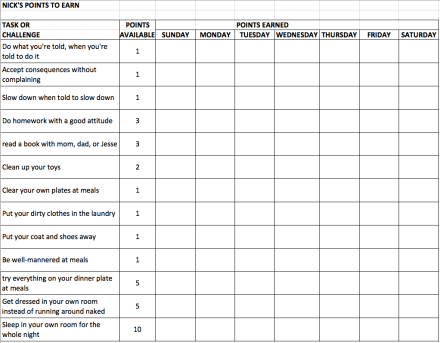
It was pretty clear early on that the therapist we were going to see at Marquette (let’s call him Tic Man) was scratching his head over how best to work with Jesse. Still, we started with basics.  Behavior chart. God, how I hate behavior charts. I hate them so bad. They’re nothing more than performance improvement plans, PIPs, and every HR person can tell you that by the time an employee is on a PIP, there’s usually no hope. And behavior charts have never worked for Jesse.

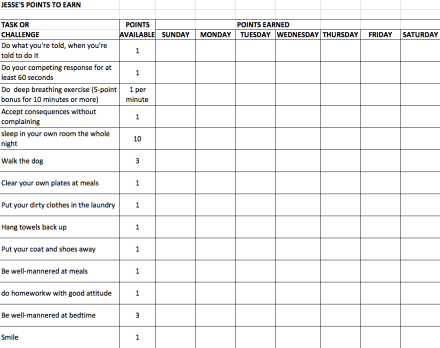
But the therapist said to do it, so I did it because, because… because I don’t know why. The goal was to get Jesse to do her exercises and practice competing responses and yadda yadda, when she was told to do them, so the number one item on her behavior chart was “Do what you’re told, when you’re told to do it.”

Mm.

It really didn’t make a difference. At Marquette, Jesse refused to participate in therapy, just like at Rogers. She whined and complained and yelled and refused and fought about it. Tic Man had spoken with Rogers’ OCD People, and I quickly inferred that they all concluded Jesse is defiant and non-compliant.

After a handful of visits, Tic Man decided we were getting nowhere and wasting time. He wanted to work with us, he wanted to be able to help Jesse, but it wasn’t happening. He suggested we see a specialist on oppositional issues and defiance. I didn’t know they existed. He promised to find me referrals.

The failure was, once again, Jesse’s responsibility.

* * * * * *

While all of this shit was going down, Jesse got sick. After missing a few days of school, I took her to the pediatrician and learned she had pneumonia. We treated that with an antibiotic for a week, to no avail, so then we started a second antibiotic that did the trick.

Meanwhile, I was planning to take Jesse to a new psychiatrist for med management, a woman who has a big interest in PANDAS and PANS.  “Pediatric Autoimmune Neuropsychiatric Disorders Associated with Streptococcal infections.” That’s PANDAS.  And then “Pediatric acute-onset Neuropsychiatric Syndrome.”

Basically it’s this: some kids, when they get strep, also experience a bad and sudden onset of Tourette’s and OCD symptoms, psychosis, other bad stuff. PANS is sort of a lesser version, I guess. PANDAS minus the “duh,” as my friend Nancy says. I don’t know much about it all. Something about brain inflammation and auto-immune issues. I didn’t expect Jesse to have either of these disorders, because her SBMI has been around since her infancy, but I anticipated that this psychiatrist would have a larger-than-average experience with treating kids with Tourette’s and OCD because of her interest. Since medicating a child with psych meds is little more than throwing darts at a blank wall (there are no controlled studies on efficacy in children), experience is the best metric I can look at.

The psychiatrist, consistent with her desire to explore all possible explanations for Jesse’s current state of affairs, ordered a massive panel of blood tests. Massive. When we went in for the blood draw, the phlebotomist (I love that word) filled six or seven vials. I think it was something like 25 separate tests.

I could go on and on about the various results, including the fact that Jesse was on her first round of (failed) antibiotics when her blood was drawn, so she was walking around with an active case of pneumonia. But I’ll focus on the really important part: Lyme disease. The bloodwork came back positive for Lyme disease.

So, while Jesse finished off her second round of antibiotics for pneumonia, she also started three weeks of yet another antibiotic to treat Lyme disease.

We have no idea how long Jesse may have had Lyme disease. Maybe it was two years, and we’ll suddenly wake up and discover that her tics have disappeared because they were all caused by Lyme disease!

Not likely. Jesse’s SBMI has been going on for a really, really long time.

More realistically, maybe Jesse has had Lyme disease for a few months. Maybe we mistakenly ascribed her fatigue to her psych meds, when it was actually being caused by Lyme disease and pneumonia. Maybe the fever during her bout of pneumonia was also the fever of Lyme disease.

* * * * * *

I’m not being chronologically precise here because I’m too lazy to go check the calendars, and it doesn’t really matter all that much. The critical thing in this long-winded story is this: during the time Jesse was refusing to participate in therapy and terrorizing everyone at school and acting like a real wanker, she was suffering from untreated pneumonia and Lyme disease.

We didn’t know it at Rogers, but by the time school staff and Tic Man were telling me Jesse needs to work on compliance and defiance issues, they knew all this. The fact that my daughter’s body had been under infectious attack for at least two months didn’t seem to factor into their thinking, as they evaluated whether she has a defiance and non-compliance problem that requires professional intervention.

That really bothered me.

I had been chafing at the idea that Jesse is so oppositional that it’s defining her experience.  Tic Man’s proposal that we see an “expert” on compliance was sort of a last straw. Something about it rubbed me wrong after I pondered it for a day or two. I wasn’t exactly incensed, but this is what I felt: “I am sick of this shit.”

I am sick of swimming in therapy and behavior mod tools at school. I am sick of Jesse’s entire life being about her tics and OCD and anxiety and therapy. I am sick of therapists who deconstruct her into little dime baggies of behaviors to attack, and who lose sight of her wholeness in the process.

I don’t want to do it anymore, because it’s making our family’s life suck in all new ways.

And if I’m sick of it, I can only imagine how Jesse feels.

I called Jesse’s long-time therapist, Dr. Abrams. We had a lovely chat. He pointed out that he works with oppositional kids all the time. I already know how to deal with oppositional behavior, because we’ve been doing it all along, for years — positive reinforcement, rewards and incentives, blah blah blah.  We made an appointment for Jesse to see him. We agreed that he and she would just talk — not practice competing responses and breathing techniques, not try to trigger obsessions and practice control, but just talk. About Jesse.

I reconsidered the behavior chart. How in the world did I get to a place where I would actually try to incentivize my child to “do what you’re told when you’re told to do it”? That is ridiculously disrespectful. I don’t run a prison.

If someone told me that’s the most important thing for me to do? I would have two words to say in reply (ahem): “Fuck you.” I wouldn’t even add, “pardon me.” And then I would proceed to never, ever, ever do a single thing I was told to do.

I spoke with Jesse’s teacher, who told me she doesn’t think Jesse is particularly worse in the non-compliance arena than any other fifth grader. She told me Jesse seemed to be developmentally pretty normal on this front.

I’ll tell you, any time anyone tells me Jesse is behaving in a developmentally normal way, I see celebratory fireworks. Even if the behavior is negative, that is really good news to me.

I went out to breakfast with my friend Nancy, a wise woman who frequently agrees with me. Confirmation bias is important in times like these. She told me a story about an early intervention tactic she had been talked into for her young son. She tried it for a week and realized it was crazy and punitive and all wrong, so she quit doing it and explained to the therapists why it wasn’t working. “The parents are being non-compliant.”

Nancy and I chattered about what we want for our children. In the course of our conversation, she said, “Maybe what Jesse needs to be working on is… joy.” I worked really hard not to cry.

* * * *

I’m ready to be non-compliant too for a little while. Jesse definitely needs behavior therapy in the years ahead, but I’m going to give her a vacation from it for now.

She labors under the constant weight of OCD, Tourette’s, anxiety, depression, and self-esteem that runs as low as the Mariana Trench, and then the universe added pneumonia and Lyme disease to the mix. She’s spent three of the last seven months in intensive out-patient therapy. She hasn’t made a new friend her own age in at least two years. She humiliates herself at school every day, even as she’s haunted by a timer and an aide. What she thinks about most, every day, is what’s wrong with her.

I chatted with my brother Mark recently while we were visiting in California. I was telling him how hard it is to deal with all this stuff. “I want Jesse to get better, but I don’t want her to go through life feeling like there’s something wrong with her, like she’s…” I wasn’t able to find the words, but Mark finished the sentence for me.

“Broken.”

My heart squeezed when he said it. There was empathy, understanding, compassion, a knowing sadness in his voice. Why wasn’t I hearing any of that from all the adults treating and supporting Jesse?

Maybe the problem right now isn’t so much that Jesse is being non-compliant. Maybe the problem is that the adults around her are being non-compassionate. Maybe she’s sick of having an aide follow her all over the school, barking orders at her. Maybe she’s sick of having her school days defined by the blessed timer she wears on her ankle.  Maybe she’s depressed by not being able to eat in the cafeteria with other kids. Maybe she hates her life more than a little, because of the crazy shit that comes out of her mouth every single day, thanks to Tourette’s. Maybe she hates exposure therapy, because it just hurts too much inside to do it.

Maybe she’s sick of feeling broken.

Maybe her defiance isn’t about being rude, but about trying to tell us something that we’re refusing to hear.

That’s a lot of maybe’s.

So I’m going to spend some time trying to listen. Get past the maybe’s, just maybe.

Somewhere along the way, all the therapy and the techniques and the interventions made me stop listening to my child, made me stop treating her with the dignity that is her due as a human being. The doctors and experts built a wall between us, even as I thought they were connecting us in a journey to recovery.

So we’re going to step back from therapy for a bit. We’re going to let Jesse’s body heal from the infectious attacks. We’re going to hunt some joy for a change. We’re going to hunt for our whole child.

Imperfect, but unbroken.

Once we find that, we’ll head back to therapy and see what we can do about the rest of it before she drives us crazy.


In defense of Donald Trump

Everyone is so angry at Donald Trump! I don’t get it. I understand disgusted, grossed out, creeped out, revolted, frightened, extremely anxious, even terrified. But I don’t understand angry or let down.

The past few days I’ve been reading stuff from both sides of the political aisle complaining about The Donald’s lack of interest in civil discourse, his gutter tactics. Op-ed’ers accuse him of wanting to destroy America and the Republican Party.  Writers and politicians insist that he’s pandering to racists, misogynists, and stupid people. There’s so much anger behind the words.

And I don’t think that’s fair at all.

The Donald doesn’t want to destroy America. I firmly believe he wants America to be the most successful nation in the world. It’s in his own self interest.

The Donald doesn’t want to destroy American political institutions. He wants and needs a very successful, one-party system of elected government to make all his dreams come true. And many people would argue, from both sides of the political aisle, that this is what we have already anyway. So what’s the big issue? Why so much more anger for The Donald than for our broken political institutions?

The Donald isn’t pandering to racists and misogynists. That suggests that he’s reaching out to them from a different place in order to use them. This is all wrong, in my humble (NOT) opinion. He’s not pandering or using them. He’s one of them. He speaks to and connects with them because he understands them completely. He’s communing. This shouldn’t surprise anyone, nor elicit anger. It’s just sad, so very sad.

With just a few weeks left in the presidential race, I tend to read the news these days like a woman drinking water after 40 days and nights in a dry desert. For the past week, I’ve been reading that The Donald is going back to his core followers with his ugliest messaging, talking smack about jail for Clinton, making fun of NFL players for being wimpy about concussions, making cheap hay of Bill Clinton’s sexual exploits as a reflection on Hillary, talking worldwide conspiracy theories about the Clintons, blah blah blah. It ain’t helping in the polls, and everyone wants to know why he’s tanking Republican dreams this way. Doesn’t he know that, in order to win the election, he needs to reach out to moderates, women, not-racists, and all the reasonable people out there looking for any excuse not to vote for Clinton? Why isn’t he doing it? Is he insane?? He wants to destroy everything!

I don’t understand the blind spot. To me, Trump’s behavior is perfectly rational and makes perfect sense. The man is not stupid. He may lose control sometimes, and he may be a complete asshole, but he’s also very calculating and he knows how to read polls. He’s a survivor. He knows he’s got only the longest of long shots at winning the election. That gig is up, only this time he can’t turn to a bankruptcy court for an exit strategy.

What he can do is build his new brand, his political brand, while he’s got free media coverage up the yin yang. That’s what I believe he’s going to be doing until election day. The Donald has been messaging his brand — not to his core political base, but to his core consumer base. He’s building a market to sell to. He doesn’t care about votes and swing states and all that nonsense anymore. Sure he wants to be president, but barring that? Market share.

What will he sell? I have a pretty good guess. He’s got Ailes from Fox and Bannon from Breitbart in his pocket. I have little doubt that they’re already sharing notes on a new Trump-wing media empire. (I can’t rightly call it right- or left-wing, because no one really knows what The Donald is.)  And maybe steaks, or bottled water. I see his name showing up on product lines in some big-box stores like Walmart. There is so. much. money to be made, and so much ego to stroke. Those millions and millions of people who voted for The Donald in the primaries are going to love his post-election product launches. And who knows, maybe he’ll set up a Norwex pyramid. 

The Donald has it all going on.  He manipulated the tax code to avoid paying taxes for years and years, thereby personally living the tax-free dream. He’s all about personal profit and enlargement, and thus necessarily serves the greater good (because when a man gets rich, wealth trickles off him like sweat). He understands that the role of government and courts is to protect rich people just like him — hence bankruptcy laws for deadbeat debtors and tax loopholes for real estate developers. He has fully embraced the idea of unleashing politically-motivated threats of criminal prosecution and personal destruction on his enemies, just as Republican congresses have been doing for years. He’s got a lifetime of free marketing ahead of him, thanks to the Establishment Media’s obsession with him. The Donald perfectly expresses the wet dreams of right-wing America and Chicago-schoolers of two or more decades ago.

So why is everyone so angry and disappointed? Give The Poor Donald a break.

And vote on November 8, for the love of country.

Or on November 28, for the love of The Donald.


grumpy about Norwex

I went to a Norwex party. I bought product.

Now, some months later, I need to purge my soul, because it’s still sticking in my craw.

It pained me to go because I don’t do consumer parties, plus I knew there would be strangers present and I’m not good at strangers. But a very nice, indeed a very wonderful person asked me to go to the Norwex party at her house, which she was hosting at the request of a friend who sells Norwex things. She promised beer and her excellent guacamole. That, in combination with friendship, was apparently incentive enough for me to do something I would generally loathe to do.

I’m a simple woman.

* * * * *

If you don’t already know (and apparently everyone does except me), Norwex sells cleaning products, mostly made out of microfiber and little or no “chemicals.”

I read a blurb on the internet about Norwex, by Norwex. Don’t quote me, but what I recall is that it was started by a Norwegian after a Swede invented microfiber. The nationalities were highlighted and seemed to matter, a lot. This is a most Scandinavian affair.

I’m not sure it helps explain the triumphant platinum grey model on the home page, whose toned back sings to me, “La la la I’m free and everything is so white and happy and the sun is shining, because Scandinavian microfiber cleaning supplies and New Zeeeeealand!”

Screen Shot 2016-10-06 at 12.59.40 PM.png

I’m equally unsure that anything explains this bonny wee lass in odd plaid, bathing in the same white glow and engaging in child labor.

Screen Shot 2016-10-06 at 1.00.07 PM.png

I wonder how they keep her skin so pale in so much sunlight. Obviously not sunscreen, which involves a lot of chemicals.

I clicked around on the Norwex website and pondered. Norwex is offering a whole lot of awesome. They’re so into it that it’s a branded movement (non-bowel).

Screen Shot 2016-10-11 at 2.58.32 PM.png

Norwex is committed to “radically reducing chemicals in our homes and our environment.” Cool. Norwex’s web page presents four simply-stated factoids in this regard.

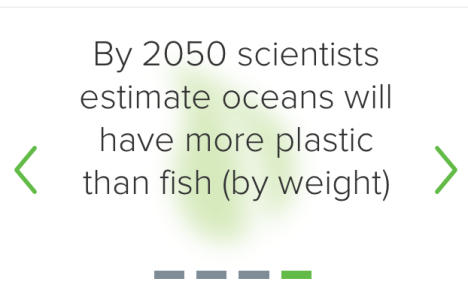
Screen Shot 2016-10-06 at 1.09.41 PM.png

That’s bad.

Screen Shot 2016-10-06 at 1.10.00 PM.png

Oh, that’s real bad.

Screen Shot 2016-10-06 at 1.10.08 PM.png

I haven’t heard that stat before. Bad. Really really bad.
Screen Shot 2016-10-06 at 1.09.51 PM.png

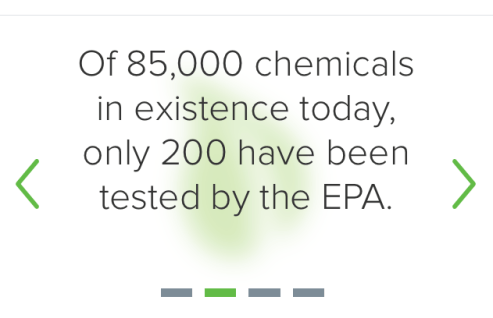
What the– ? Reading this statement set off racing thoughts. What does that mean, 85,000 “chemicals”? Does it refer to only human-made chemicals or does it include naturally occurring ones? How is the number so well-rounded?  What does “tested” mean? Why are we talking about the EPA? What about the FDA and other regulatory agencies? What about radioactive materials?

I tumbled on from there, my head filled with questions about how Norwex manufactures, packages, and delivers its goods. My extreme suspicions and rages about the hypocrisies and simpleton-isms of consumer marketing did not serve me well. I wasted a lot of time.

I googled “85,000 chemicals” and found references to an EPA database, the TSCA Chemical Substance Inventory. There are about 85,000 industrial chemicals on that list, so there you go, there’s the source of the number. I learned (I think) that very few of the chemicals on the list have indeed been “tested,” but I couldn’t figure out what peeps want them to be tested for. I tried to access the database for a few minutes. I wasn’t immediately successful, and there was no humorous and pithy twitter feed, so I lost interest quickly.

I know I know, “pithy twitter feed” is redundant, but I like the sound of it.

I wondered about whether any chemicals on the list were used to manufacture Norwex’s microfiber, which is synthetic, and whether they had been tested. Why is Norwex okay with using synthetic fabrics when Norwex is committed to reducing  the use of chemicals on earth? How many pounds of the plastic in the ocean in 2050 will be from packaging for Norwex products, and of the 88% of the ocean surface covered in plastic, what portion constitutes plastic from Norwex? Is that a run-on sentence or merely compound? What horrible chemicals, plastics, and pollutants are involved in transporting Norwex products to the consumer? How can any company selling a bunch of consumer crap to as many people as possible for as big a profit as possible truly care about reducing consumption?

I needed something to brace myself against, to stop the flood of irritable questions. So I googled microfiber. I learned from wikipedia that microfibers “are made from polyesters, polyamides (e.g., nylon, Kevlar, Nomex, trogamide), or a conjugation of polyester, polyamide, and polypropylene…”

Huh. Time to drill down. I googled polyester for starters and learned from some random source that polyester is an ester made from an acid, benzene-1,4-dicarboxylic acid (teraphthalic acid) and an alcohol, ethane-1,2-diol.

AHA!

It is often known by its trivial name “polyethylene terephthalate (PET).”

Well of course. I knew that.

I said “polyethylene terephthalate” aloud many times in my best Midwestern American, Southern American, and English accents, all with random stresses on different syllables. Any word set containing that many vowels and the letter combination “phth” deserves as much.

“Carla, is your shirt made from a cotton jersey?”
“No, it’s polyethylene terephthalate. Do you like it?”

“I hated growing up in the 70’s, it was the age of ugly polyethylene terephthalate.”

“Have you seen that John Waters flick? I can’t remember it’s name… Oh — Polyethylene Terephthalate!”

When I was done with this sad, saliva-spewing monologue, I wiped the computer screen down with a kleenex, because I didn’t have an absorbent microfiber cloth handy.

Honestly, do you want to wear polyester on your body when you know its molecules look like this?

Screen Shot 2016-10-12 at 10.36.46 AM.png

It looks really itchy. Plus isn’t something on that ingredient list derived from petroleum? I don’t want to wear oil for a fabric.

I decided to drill down further. I tried to figure out if any of the inputs to polyester (or the inputs to those inputs) are on the TSCA Chemical Substance Inventory and have been “tested.” I got absolutely nowhere. I didn’t have the information set I needed to use the database search engines. And anyway, I couldn’t even learn whether Norwex’s products are in fact manufactured out of polyester or one of the other microfiber options listed in the wiki page. What if they’re Kevlar?

Google is useless sometimes.

* * * * *

Norwex doesn’t do storefront retail. It sells products via house-party “multi-level marketing” pyramid schemes (think Tupperware) designed to reward those of us who are perfectly comfortable making friends with anyone, who can identify suckers — sorry, consumers with ease, and who are happy to invite ourselves into others’ homes to sell things for a profit.

And that’s how I ended up at a Norwex party, with some social anxiety in tow. But my friend the hostess was gracious, her guacamole was excellent, and the offer of beer was immediate. I didn’t fart on anyone, and I don’t think I said anything truly offensive.

If I were to just stop right there, I’d call the party a success.

But there was the Norwex business to attend to. A small group of women lounged in the living room, making awkward conversation. Norwex Lady stood before us. On display were unfamiliar-looking small cloths of many colors, some other cleaning devices, a stick of butter, and a bowl of small eggs.

A peculiar tableau, to be sure.

* * * * *

Norwex Lady took that stick of butter and smeared half of it all over a living room window (note to self: I will never host a Norwex party), and then she cleaned it up with a small damp Norwex cloth, by just wiping that cloth in perfect elliptical passes 20 or 30 times until the window twinkled and sparkled like new. No chemicals used! Just the cloth! Spotless window! Wiping hand miraculously not greasy! Wasted stick of butter!

It was a mighty dramatic demonstration. But my kids would never smear a stick of butter on the window, and anyway fat is easy to clean up. Hot water; cotton rag, zero polyethylene terephthalate. The real issue is things like stickers that I forget to pull off. After a couple months, the adhesive on those innocent “removable” stickers cures up so hard it takes a blow torch or toxic solvents to get them off. If Norwex Lady wanted to impress me, she needed to show me a microfiber cloth that would take those blasted stickers and their adhesive residue off of my windows, as well as off of my wood furniture.

Didn’t happen.

The eggs were used to demonstrate how well the vegetable scrubber microfiber cloth works. Norwex Lady lovingly wiped those eggs down with the green cloth until they shined like a baby’s bottom. Lovely lovely. But all I could think was… Cleaning the smooth surface of an egg is easy. Show me how that cloth works on a furrowed dirty beet or a cantaloupe.

She didn’t.

It occurred to me as I sat there that the primary purpose of the eggs wasn’t to demo the cloth but rather to show us that Norwex Lady has chickens in her backyard that provide her with eggs to eat. Very post-modern self-reliant frontier chick! A groove that goes well with the no-chem Norwex model. And hey, I can respect that.  I respect that she showed us her eggs. I asked her how often her chickens produce eggs. Based on her response, I calculated she’s getting about three cute little eggs a day for a family of four.

Terephthphthphth… Sorry girl, I know you’re still buying eggs at the grocery store.

We spent quality time talking about Norwex’s anti-bacterial kitchen cloth, a small, unattractive cloth enwoven with silver to keep it from growing bacteria. In my mind, I gave myself a quick head slap to stop myself from wandering off into questions about where the silver is mined, what chemicals are used to separate it from the ore and weave it in with the chemically-made microfiber, whether reasonable labor laws are followed in the mines Norwex silver comes from. I didn’t want to be rude.

Norwex Lady showed us a chart comparing bacteria levels on surfaces cleaned 8 or 9 different ways — lemon, vinegar, clorox, some common squirt cleaners, simple water, and of course a Norwex silver-enwoven wet cloth wipe down. The clear winner was the Norwex cloth.

I stared at the chart and could not bite my tongue because an important option was missing: soap. I like to clean my kitchen counters with soap, because, well…. Soap. “Why isn’t soap and water on there?” I asked.

Norwex Lady had a ready answer: do you know how much DISGUSTING stuff is in soap?? Did you know they use rendered animal fat in soap??

Ewwww, went the polite collection of women. And that was that. A perfect deflection. Everyone nodded and let it go.

Which led me to conclude that soap and water actually won the bacteria contest.

Norwex Lady talked quite a bit about kitchen cloth maintenance. My idea of cloth maintenance is, “launder.” But this was different. Norwex Lady started by explaining that the cloths are anti-bacterial. They won’t stop things from growing on the surfaces that they clean, but Yuck won’t grow on them, because silver (say it dramatically, every time), so you won’t spread Yuck  around when you wipe. Also once they trap particles and grease, they do not. let. go. Everrrrrr. They’re like the pit bull terrier of the microfiber rag world.

That sounded tempting to me. I have serious issues with spreading Yuck from place to place in the kitchen and I have strict protocols. I have a 36-inch-wide bank of kitchen drawers, and one entire drawer is devoted to cloths, towels, and cloth placemats. Long ago, I bought a cheap pack of white cotton terry car towels at Costco, it was about 20 bucks for 60 cloths. They fill more than half the drawer. When I pull one of those out, I use it and then down the laundry chute it goes (I’ve got a little access door to the chute in a wall right in the kitchen). The dish towels don’t get used for more than half a day, and if they touch anything Yucky or Gross? Down the chute. If a cloth or towel hits the floor even for a second? It stays there for a time to wipe floor drips of water, or else it goes straight down the chute. Placemats? One use, down the chute.  A cloth is on the counter and I can’t tell why it’s there? Down the chute.  Any question of any kind as to the sanitary status of a cloth? Down the chute.

About 15 minutes ago, Jesse announced to me that she just vomited in my rag and placemat drawer. I stared at her, blinking for a long moment as I processed the news. All I could eventually say, in a near-whisper, was, “Why would you do that?” I sent her upstairs before any further interaction would drive me into a spiral of rage.

I emptied that drawer, my entire supply of rags and towels and placements. Down the chute.

Once stuff goes down the chute, I have specific tactics in the laundry as well. I know Anthony disregards these rules completely, and I try not to think about that too much, but in my laundry world (the correct, sanitary world), three important rules govern. One, kitchen cloths are washed separately in hot water, with plenty of soap and some form of peroxide. I don’t care about stains, I only care about clean. Two, kitchen cloths are never ever washed directly after a load of underwear. Because fecal matter, parts-per-million, and gross yuck disgusting (I’m literally fighting off a gag reflex as I think of it right now). Three, if ever a piece of underwear sneaks into a load of kitchen cloths, I go outside to gather myself, and once the sick feeling has passed I come back and run the load again (offending underwear removed).

So anyway, this is a long, long way of saying that the idea of a cloth that won’t spread crap from here to there, that I could keep around for more than a little while, is tempting. But Norwex Lady went somewhere bad, very bad,  with the silver story. She said, you rarely have to wash this cloth, because it doesn’t grow bacteria quickly. You only have to wash it when it starts to smell bad.

“But,” I interrupted, trying not to make faces. “But… if you can smell it, by then isn’t it too late?”

Norwex Lady ignored me. I tried again.

“Am I allowed to wash it before it smells? Because I don’t think I can wait for it to smell.”

Women were snickering. Norwex Lady was not amused.

Instead, she returned our attention to cloth maintenance. Launder it occasionally (when it starts to smell like ass).  Once  in a while, in order to “release” trapped particles that have achieved semi-permanent attachment to the cloth,  boil it for 15 minutes.

A cloth I have to boil for a quarter hour to keep clean. Huh. I wonder what the carbon footprint is on that. And also, this gets me to thinking as I sit here. If this stupid cloth traps particles and never lets them go without a good boiling, do I really want to use it to clean up things like Jesse’s vomit in my rag drawer?

No. The answer is plainly no. I attacked the vomit with a white terry car rag. Down the chute.

* * * * *

There was so much to show us. The cleaning products — dish soap, laundry detergent, some sort of scrub paste that contains particles of marble or something like that — didn’t call to me. I’m picky about cleaners, and also I can’t pay 24 dollars for a small bag of laundry detergent that claims to work with just one teaspoon per load of laundry. I don’t know how the particles of such a small amount of soap can even reach each article of clothing in a normal-size load.

The dryer balls and dishwasher balls? Couldn’t get past the name. Juvenile associations.

Nor did I want the “Body Scrub Mitt.”

Screen Shot 2016-10-13 at 2.02.46 PM.png

“BacLock” is a trademarked made-up word that means this microfiber’s got the silver thing going on, so that it will magically keep itself hygienically bacteria-free. (Until it starts to smell.) Norwex Lady said she and her kids don’t even use soap anymore in the shower, just this mitt.

My brother Mark emphatically explained to me once why he doesn’t like to use soap from someone else’s shower. “The last thing people always wash in the shower is their ASS, so that’s what’s on that bar of soap when I pick it up. Why would I want to use that??”

Fair enough.

This bath mitt takes it to a whole new level by getting rid of soap. My kids are supposed to use it to clean their bodies, which inevitably includes their crotches, and by tomorrow night’s shower the mitt will magically dis-arm all the fecal matter so they can safely scrub their sweet little faces safely? Don’t worry, it’s safe, as long as you throw it in the laundry when it starts to smell?

I don’t think so.

Then there was the premier product, a really expensive mop system, dry and wet, well over a hundred dollars. Buy the separate rubber brush to scrape down the microfiber cover. Anthony would divorce me, I think, if I came home with another floor cleaning mechanism. We already have swiffer sticks, a Shark steam cleaner with many microfiber covers (because one use, down the chute!), a Bissell carpet steam cleaner, and a Bissell spot cleaner. Also a microfiber dry mop with a couple covers. Also the Dyson vac with allergy-kit attachments. Just no. No more.

* * * * *

But in the end I did buy some product. It’s how parties like this work. I would have felt awful leaving without placing an order. There was so much peer pressure.

Okay okay, there wasn’t. My hostess friend made perfectly and absolutely clear that I didn’t have to buy anything, but then there was Norwex Lady being really nice and she used a whole stick of butter. I couldn’t stiff her.

I bought a furniture cleaning mitt.  Let me show you the marketing on it.

Screen Shot 2016-10-06 at 1.06.53 PM.png

So cute, and only EIGHTEEN DOLLARS and some change, which is so much cheaper than spray cleaners. Plus the shape is so useful for getting into corners, just shove my thumb in them. I’m really looking forward to using this thing until it smells. It arrived in a small clear plastic bag, and I promptly threw it down the chute, because any new fabric in the house goes down the chute.

I haven’t seen it since, because Anthony put it away and I have no idea where it is.

I bought the veggie cleaning rag. I don’t know why. I must have had in mind the amount of money I intended to spend, and the invisible money thermometer hadn’t filled all the way on my order total. I’ve used the rag twice, and meh. It’s sitting on my kitchen counter right now but it will be unused for the foreseeable future, keeping itself bacteria-free because silverrrr.

I bought a pair of silver-colored kitchen scrub sponges. They looked like a good alternative to a skanky kitchen sponge — though grant you, my kitchen sponges never get skanky because I replace them every week, thus contributing greatly to the ocean’s garbage crisis. But when I got the Norwex sponges, the instructions said I can use them on non-stick surfaces but not on stainless steel. Whaaa? Since my kitchen sink is stainless steel, this makes them tricky. What’s the use of a sponge if I can’t scrub dishes with it and then scrub down the sink?

I also bought a couple of those magic kitchen cloths, with a promise to myself to never let them smell. They look attractive enough in the marketing.

Screen Shot 2016-10-06 at 1.02.41 PM.png

But in person, in the buttercream color I ordered because it was on sale, a cloth looks like this up close:
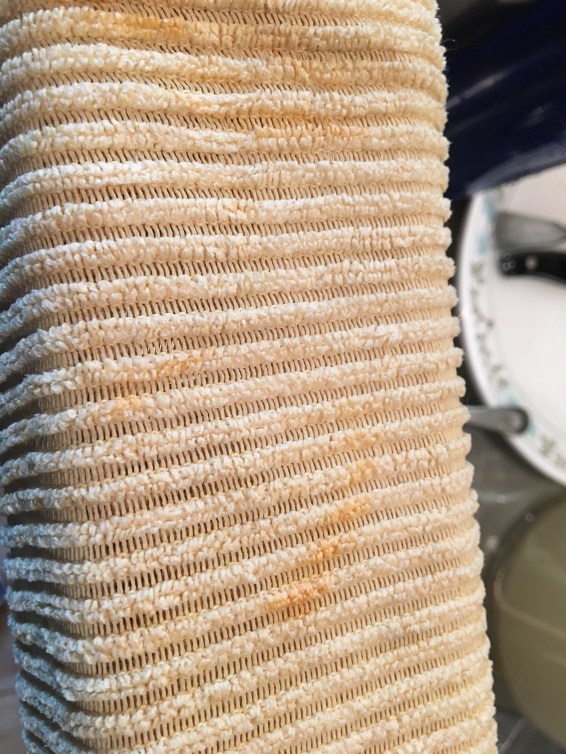
img_2524

When you pick it up, it feels kind of small and shoddy, cheap even. You see that little reddish smear just shy of center? Kimchi juice. Kimchi stains never come out.

Here’s what it looked like after I cleaned up a cocoa powder spill:
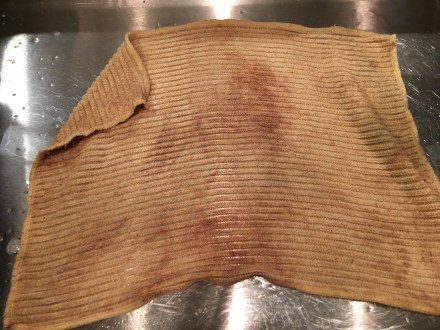
img_2595

I know you’re wondering if “cocoa powder” is a euphemism for something more disgusting, but no, not this time. I couldn’t get that stain out. I tried pouring a kettle of just-boiled water over it, just for kicks. The stains remained firmly in place. Down the chute it went. I can’t bring myself to boil it for 15 minutes.

But I’ll tell you what. That ugly cloth is still pretty great. It picked up that cocoa powder without leaving a trace behind, like a black hole swallowing light.

* * * * *

There is no moral to this aimless story. I went to the party, my heart full of mockery and suspicion. I bought products made out of the very chemicals Norwex claims to be fighting against. It arrived in plastic bags, which will join the plague of plastic that is destroying our oceans. I can’t find the dusting mitt, so I’ve never used it; the veggie scrub and kitchen sponges are useless. They were probably shipped from overseas somewhere, landing in my house where they’ll languish, completely wasted, until I throw them away in a few years.

This is the true scourge of the consumer age, the real reason our planet is covered in mountains of garbage: companies like Norwex play to consumers’ interest in helping mother earth, by encouraging us to engage in more consumption rather than less. And I totally fell for it.

I suck. I think I’ll drop out and start subsistence farming. It’s the only way to atone for my existence.

Or, well… Maybe I just won’t go to any more Norwex parties.


negative numbers

We’ve moved on to the Tourette’s/tic clinic at Marquette University, to continue therapy for Jesse in a less intensive way than the 4-day-a-week Rogers program. We’re starting out working on some belly-breathing techniques, and also our lead therapist has suggested we put together behavior/reward charts to incentive Jesse to get with the program.

Uuuugh.

* * * * *

We’ve tried behavior charts (aka sticker charts) before and they haven’t helped. Because Jesse = too much pressure. The ordinary course of events is as follows:

Jesse looks at the behavior chart and immediately feels anxious about the number of different ways she can earn points, even if the list has just two items. Too much pressure.

Jesse becomes obsessed with how many points she has earned and argumentative about the metrics. Too much pressure.

Jesse becomes upset when she doesn’t successfully accomplish a goal that would earn her points. Too much pressure.

Jesse ends up feeling even more terrible about herself after deciding she can’t earn enough points to get prizes, even as she earns prizes. Too much pressure.

Jesse feels so terrible about herself as a result of the point chart that she decides she doesn’t deserve any prizes ever, even if she’s earned enough points to get them. Too much pressure.

Jesse feels utterly disappointed about the prizes she earns. All the pressure has taken away the savor of success.

Jesse abandons point chart. Mom and Dad are relieved.

Fail.

* * * * *

But I’m nothing if not persistent, and I’ll take expert advice openly most of the time. Marquette says give it another try, so I’ll give it another try. After procrastinating for three days, I finally opened Excel and got to work making point charts.

Here’s Jesse’s latest chart:

screen-shot-2016-10-04-at-11-01-57-am

(Relax about the weird formatting, I’m too lazy to do anything other than a screen grab today.)

AndI had to do a chart for Nick as well or he’d have an understandable and well-justified hissy fit:

Screen Shot 2016-10-04 at 11.12.45 AM.png

Then there’s the reward chart:

screen-shot-2016-10-04-at-11-04-46-am

Blank spaces available for kids to add more prize ideas.

Not bad, right? Opportunities for hash marks up the yin-yang — no stickers. No more stickers! I can’t take any more stickers!

The idea is to create a win-win situation if you can get the child to commit. Even if they’re doing badly on any given day, I can simply create opportunities for them to earn points and feel better about themselves. The prizes include a range of short-term and long-term options, so they can spend some points immediately and save some (or all) points up for larger prizes. This helps develop some concept of delayed gratification, which I imagine is important for someone with massive impulse control issues like Jesse.

It took quality time to put these charts together. I thought hard about point structures — how many points should an imperfect child be able to earn in a day, and how quickly do I want that to translate into particular prizes? I had to dig deep in my mommy brain to work this stuff out. And I get bonus points for the genius move of adding a massive-point-earning item for sleeping in your own room all night. Anthony and I are really rooting for that to take hold.

It’s a pain to do this, but I feel good about it for now. I don’t want to be bragadocious, but these charts are good, they’re the best charts you’ll ever see, they’re fantastic and they’re gonna work, because I’m an expert on behavior charts, I’ve been using them for years. The universal failures in our past efforts with behavior charts just prove how great I am at behavior charts, because my kids are still alive, and doesn’t that make me the best mom ever? The best.

We’re gonna Make Jesse Great Again with these charts.

* * * * *

I presented the charts to the kids yesterday. Nick immediately began to harangue me about how he could earn points, whipping himself into a frenzy of doing homework, reading books, and picking up toys. It was overwhelming. I had to direct his attention to critical item #3: “Slow down when you’re told to slow down.” Throughout the day, he did just that, for at least 30 seconds at a time, taking deep breaths and dramatically Being Still, in my face. Maybe I should have added a separate item, “Get out of mommy’s personal space when she tells you to.”

Jesse feigned indifference to her chart. I understood perfectly. She’s been down this road before. It has led to nothing but emotional bankruptcy. But she didn’t argue about it or reject it outright. I explained that it’s as much for Daddy and me as it is for the kids: our therapist is pointing out anew that we have to focus on effort, not success, and find what’s positive in each day. It’s the persistent problem of parenting challenging kids: you can get stuck on all the negatives, and you forget that there’s a whole lot of good stuff that happens on any given day.

So I rah-rah’ed the charts to Jesse. We’re going to stick to what’s positive. No down side. No losing points, no negatives on these charts. Only wins are recorded.

She went upstairs and took a nap.

* * * * *

Jesse had a hissy fit just before dinner, I don’t remember about what. The what doesn’t matter. We’re learning that raging episodes are common with people who suffer from Tourette’s. No one is entirely sure why, what the mechanism is in the brain or whatever. But it makes sense to me, that when your head is full of bewildering obsessions and offensive behaviors you might tend to get just a little angry. Jesse can pitch an unexpected and sudden fit about anything these days, from the feel of a grass stain on her toe to an imagined spot of strawberry jam in her hair, from the sunny weather outside to the question of whether Donald Trump will destroy the world if he’s elected president. Her rage blows up and, as long as we don’t fan it, eventually dissipates on its own like a noisy local thunderstorm cell.

Anyway,  Jesse had a raging episode and I sent her to her room. She quieted down on her own and came down later to join us at dinner. We tried to keep it positive. I reminded her that by going upstairs when I told her to, she earned a point on her chart. Anthony rah-rah’ed as well. But still she started whining and complaining about something, so I reminded her that if she used good manners during dinner, she’d get another  point.

Then Jesse started talking more assertively, in frustration and anger, about negative numbers. Her words were jumbled, incoherent at first, almost as inchoate as they were important to her. Anthony and I compared notes later and we had each received a slightly different message, but the paraphrased gist of it was this:

I’m always in negative numbers. No matter what you tell me, I’m always fighting negative numbers. My behavior is so bad that I start at negative, because I can never control myself, and I can’t catch up to positive numbers. So me sitting here at dinner, this is as positive for me as it gets, because I was finally able to control myself just enough to make it down here, even though I’m whining. So get off my case.

My heart ached as I listened to my little 11-year-old child trying to express these thoughts, such big thoughts for such a little thing. There was so much sadness and frustration behind her eyes. There is so much imagined, preemptive failure lurking in the pits of her soul, waiting for the right moment to well up and crush her. Anthony and I can’t reach in there deep enough to wash it out for her.

But also there was that hint of self-advocacy, which I was well-pleased to hear. Her open communication created an opportunity for Anthony and me to stress the sweet nothings even neurotypical kids need to hear once in a while:  you are a good person; we know you’re trying as hard as you can; you deserve to be rewarded; you deserve good things; don’t beat yourself up; don’t give up. And also for good measure… Let’s try the behavior chart, I think it’ll help. (I tried to hide my skepticism.)

How does a person overcome a birthright of so much self-loathing? How do you find the right medication to aid in that journey?  How much self-talk does it take to re-shape a self-image that’s so broken? And how many behavior charts does it take to lift up a broken heart?

No idea, but here we go with the hash marks. Yay.


Walmart + Pokemon = consumer hell

I start at Michael’s. I think it’s going to be a quick in and out job on this Saturday morning, purchasing some Pokémon cards and plastic sheets for trading cards, the ones that go in a 3-ring binder. Nick wants the sheets for his exploding collection of Pokémon cards. Jesse has decided she’s going to give Pokémon cards a try, so I’m going to buy her a starter deck as a prize for actually going to school 5 days this week and not giving up, despite a couple of hellaciously bad days. (Note to self: don’t forget her meds in the morning ever again. Empirical evidence is in: they are working.)

Nick doesn’t  play any actual Pokémon video games, because we don’t have a real gaming platform. Last year, the kids got a Wii box for Christmas, but apparently it’s 92 years out of date and the only games we can play on it are Super Mario, Wii sports, and a “Dance party” thing that measures how well you dance with your right hand, which is holding the Wii remote. Moving the remainder of your body is optional.

Nick also doesn’t play Pokémon card games, which are complicated affairs involving a lot of adding, subtracting, multiplying, and other forms of number and decision-tree manipulation well beyond his seven years. He just collects the cards, because that’s what his friends do on the playground after school. There is no end to card trading drama. It’s like a John Hughes teen flick, mixing together an unholy blend of tears, rage, and manipulation, the gloating glee of the jerk who takes advantage of the patsy, the tumultuous tantrum of the spoiled child who doesn’t get the card he wants, the depressing disappointment of the lonely child who can never make a good trade. It’s Pretty in Pokémon, only there are no teen girls in makeup and pink dresses or teen boys in carefully gelled hair and tight jeans. Instead, it’s a loose collection of sweet little 4- to 9-year old mostly boys in baggy elastic-waist pants with disheveled moms standing nearby, chatting amongst ourselves and pretending our spawn don’t exist for a brief moment until their cries of despair interrupt us.

“Trading” is a euphemism in this context. The kids don’t really “trade” cards.  They mostly seem to point and say things like “I want that one.” Having declared a proprietary interest, they then seek to extract the card by any means necessary, including offers of shit cards, threats of defriendment, whining and begging, sad-dog-face guilt trips, tantrums, and then, after adult intervention, something closer to a fair deal.

Swap parity and fair dealing are sophisticated ideas, not encapsulated yet in the minds  of children who have not achieved an age of double digits, nor yet in the minds of American politicians.

But I digress.

* * * * *

Pokémon is apparently a consuming hobby, filling the mind and soul with compelling images of critters of many colors and shapes. My kids want to know why most of the pocket monsters have large round bottoms. I have no answers. I hypothesize that it makes manufacturing the stuffed animals easier.

The corporate capacity of Pokémon is limitless. Last night we went to the “Pokémon Symphonic Evolutions” concert. As far as I can tell, it’s a corporate venture that travels city to city with its own score and conductor, parasitically relying on local orchestras to perform the music. Our performance was put on by the Milwaukee Symphony Orchestra at the Riverside, a lovely local venue for shows. The orchestra is brilliant, so the sound was amazing. But it was still Pokémon music, and the whole time there was a huge screen playing video of Pokémon games past and present. It was sort of a musical history of Pokémon gaming.

What a strange scene. There were teens and young adults running hither and thither with their faces under-lit by hand-helds. I think they were hunting rare Pokémon Go specimens, which I understand show up when lots of Go gamers are in one place  together. These young’ns were chased down and harried back to wherever they belonged by wizened and unnerved ushers, walkie-talkies squawking nervously at their waists. It reminded me of handlers in a goat-feeding pen.

We made it to intermission; the kids were pooped because it was late, and Jesse was starting to act hostile, so we bugged out of the second half. I survived the first half by focusing my attention on the musicians. I haven’t been to a live orchestral show in so long, and the Milwaukee orchestra has a lot of talent. I almost forgot how much I love the wash of sound. It’s extraordinary that 50 or 60 people can get together on so many instruments and make one unified piece of music.  There was a huge horn and wind contingency, which I love. I think there were six french horns, and one of them is my friend Darcy, so that was cool. Plus she got us free tickets to the show. Nothing beats free tickets to a Pokémon Symphonic Evolutions concert.

The video screen blocked my view of the heads of everyone in the percussion section, so I was entertained for many minutes by watching their headless hands busy at work on the snares and other apparatus. The rest of the time I just stared at the surface of the little computer screen sitting in front of the conductor. It allowed her to stay on proper pace with the video feed, I eventually realized. It fed her the tempo.  Every few seconds, a huge circle would flash for a split-second on the screen, like a weird subliminal cue. I watched the circle from my vantage in the balconies, and swooned in a vaguely hypnotized state.

But still I  digress.

* * * * *

Nick is collecting Pokémon cards at an astronomical rate, spending his allowance every weekend on a new pack. Also he bullies, charms, and cajoles me almost daily. So far I’ve given in to buying him a special card box and a few small card packs, and renting him several Pokémon movies off Amazon.

The movies all suck, by the way. They all suck. When I bother to sit down and watch any piece of any one of them, I can literally feel my brain cells atrophying. I’m a horrible, horrible parent for letting Nick watch these stupid movies.

But at least I don’t feed him food dyes, so stop judging me. Just stop.

Nick has so many cards, plus a fancy box to put them in, but his friends have notebooks with trading card protector sheets and he wants those now. I passive aggressively find an empty three ring binder in the basement this morning. It’s covered in girly stripes and pink roses. I disregard the 3-ring that’s pure white, sitting on the bookshelf next to the floral arrangement binder. I run upstairs. “Is this a good notebook for your cards, Nick?” I asked.

Option one: “Nooo, that’s like a GIRL’s, I need one that’s different.” To which I have planned my response. “OK, then you can use your allowance next week to buy yourself a different one.”

Option two: “Yeah, that’s great!”

Nick opts for two, and for one tiny moment I regret raising a 21st century son, who doesn’t see color and design in terms of the male/female dichotomy. I continue to ponder this as I slip on my shoes and head out, in search of plastic protector pockets for his blessed Pokémon cards.

Being an optimist, I tell Anthony I’ll be back in 20 to 30 minutes, because Michael’s is only 5 minutes away.

It won’t be the first of my broken dreams.

I hit Michael’s — because doesn’t it carry shit like this? — and wander the aisles, pushing an empty cart in front of me. The first nine employees I pass look purposefully away from me just as my sad and needy eyes settle on each of their faces; they make themselves busy with some life-critical task, in aisles filled with stickers, stencils, popsicle sticks, and 400 variations of colored and textured paper. Ten minutes into my hunt (to me it feels like an eternity), someone finally takes pity and asks me what I’m looking for. I learn that Michael’s doesn’t carry Pokémon cards or card protectors, and I should try Walmart.

I process this terrible news as I wander back toward the exit. I stop for a moment to stare hopelessly at skeins of yarn. The yarn I see is literally three-quarters of an inch in diameter. I’ve never seen anything like it. I finger it for a moment and wonder if Jesse could work with it, with her tiny fingers. Then I spot the enormous needles for it around the corner. They look like nun-chuks with dangerously pointy ends. Not happening in my house. I vacate the premises at a quick pace, trying not to get too creeped out by the white styrofoam zombie heads I pass on the way.

* * * * *

Against my own better judgment, I type “Walmart” into Google maps on my phone. It’s just five minutes away. I decide to take the plunge. Because I love my spawn, and love makes us do crazy things. Love means never having to say you’re sorry, and also love means buying your kids Pokémon shit.

I never, ever shop at Walmart, for a variety of reasons. I won’t tell you why here, but I never go to Walmart. Today I break my tradition, and I follow the squiggly blue line on my phone to that consumer trap.

I head into the most massive warehouse I’ve ever been in, bigger even than a Costco warehouse, at least that’s what I think as I stand there. I sweep my eyes from left to right in an effort to orient myself. It’s hopeless. I’m right at the entrance, right where confused shoppers might enter and need help. But there’s no help to be found. I decide to just move toward the back of the store. Maybe I’ll find someone on the way. I pass Halloween candy and decor, kitchen pans, and socks. People are everywhere, touching things as they make their selections. People, babies, strollers, kids, people everywhere touching things, holding things up, appraising and comparing. There are so many choices of everything a human being could ever buy.

Somewhere near office supplies and televisions, just past the weirdly huge wall display of only Arm & Hammer products, I find a friendly-looking elderly employee, leaning calmly on an empty shopping card, who offers to help.

I take a breath. “I’m looking for Pokémon cards and card protector sheets that go in a 3-ring binder.”

She sweetly replies,  “I’m not sure about the protectors, hun, but I think I know where we can find Pokey-man cards, and maybe the sheets will be there too.”

Something about the ungainly way she pronounces the word “Pokémon” makes me feel a vague anxiety. She grabs her empty shopping cart and slowly executes a 3-point turn so that she can show me the way. She takes me past shoes and video games to an area populated by magazines and children’s books. She stops at a rack displaying math flash cards.

Oh dear.

She pores over the flash card sets, muttering about Pokey-man cards. I try to be gentle. “Um, Pokémon cards come in these sort of flashy foil packs? I don’t think they’ll be here.”

But she is not to be interrupted, and I don’t know how to walk away from her without being rude. So I don’t. She finally decides I’m right. She suggests I try toys; she’ll take me there. I wait patiently while she executes another 3-point turn with her shopping cart, and we chat as we amble along slowly, slowly, ever so slowly.

Employee: “You don’t know where the toy section is?”

Me: “Nope. I’ve never been in this store before.”

Employee: “Which entrance did you come in?”

Me: “The one in front.”

Employee, looking at me like I’m from Mars: “There are two entrances.”

Me: “Oh. Um, I walked in the first opening I saw.”

At about this point in our brief journey, my helper inexplicably seems to hit an invisible boundary wall. She stops and gives me directions to the toy section, and promptly abandons me.

I walk past children’s clothing, furniture, kitchen towels, and an entire aisle devoted to garbage cans. I rip my eyes away from the man inspecting a plastic pail in the same way I imagine a dermatologist looks at a person’s skin when she’s creating a mole map. I eventually find my way to the toy section. I go through every aisle and find nothing Pokémon-related.

I stop and think. Who can I ask who would have a clue? I noticed a video game area near the TVs. Surely someone there will know where I should go.

I head off in what I think is the right direction. I pass bicycles, tennis racquets, sports gear, and fishing poles. As I near the fishing poles and see signs about “sporting goods,” I remember reading something about Walmart selling a lot of guns and ammo and I start to notice a lot of camouflage-colored things. I hurry myself along and try to shake my mind off the topic of mass shootings. I can’t believe I’m devoting all this energy to a hunt for plastic protector sheets and Pokémon cards when our world is falling apart at the seams.

I find the counter at video games, and a tall, alert man greets me. I make my inquiry and he nods, in a way that informs me that he recognizes my ridiculous ignorance but won’t make fun of me directly for it. And he’s totally pulled together and articulate. He tells me exactly what row to go to for the card-protector plastic sheets, and he tells me exactly where to find the Pokémon cards — right up front at the exit, next to the self-checkout lanes. This extremely helpful Walmart employee is lucky to be standing on the other side of a tall counter. I’ve been in this eff’ing Walmart for at least twenty minutes now, and I’m so grateful for his help that, if the counter weren’t there, I would try to hug him.

Which I now know, thanks to many years of therapy with Jesse, would be inappropriate.

I hurry off to find the plastic sheets, past the cleaning supplies, bunting, and fabrics. I press myself past the ladies inspecting crochet and cross-stitch supplies and LO! I actually find the sheets in the stationery section, just as promised! Reasonably priced to boot! I squeak a little in excitement, and a man down the aisle gives me a sidelong look. I grab three packs, which is excessive, but I’m not sure that I’ll ever shop for plastic card sheets again, given how this is going, so I need enough to last a lifetime.

Next I find the self-checkout area, marching past diapers, strollers, adult lingerie, and men’s clothing along the way.  But I don’t see Pokémon cards anywhere. I go into the self-checkout pen; nothing. I look at all the displays in its vicinity; nothing. All I can see is candy.

And then serendipity strikes. Nearby, a man is standing patiently next to his shopping cart, unmoving, just as I am standing next to mine, unmoving. He appears to be waiting for someone. I’m just stumped. A woman comes up behind him with her cart and asks him to move for her, he’s blocking her way. I happen to look over as they jostle, and LO!

It turns out his body was blocking my view of the Pokémon cards.

Break into a rendition of Handel’s Hallelujah right now.

I spend a good five minutes trying to find the 60-card starter deck I want to get for Jesse, even though the cards are all jammed into a tiny 5-foot-by-5-foot zone of just three shelves. I’m rattled, all jangled up by my tour of the entire Walmart facility, and my eyes aren’t working well.  When I finally find the deck, I’m certain it magically materialized all of a sudden, because looked at exactly that spot at least a dozen times.

But I don’t have time to think about it, I have to get out of this place before I go mad with Walmart Dementia. With my precious selections in hand, I quickly use the self-checkout to pay. Incredibly, there are no hiccups. At least none that I notice.

I head out into the drizzle of a gray morning. It’s been well over an hour since I left home. I walk into the parking lot and realize I have no idea where I am. I look back at the store and now I see the two entrances in the monolithic facade. I’ve come out a different entrance than the one I went in, and I have no idea where my car is. I spend five minutes in the enormous, stuffed parking lot, dodging minivans left and right, and eventually I manage to find my car. I’m soggy from the rain. I turn the key, rev the engine, and put the car in reverse.

And then I wait two final minutes for two other cars to back up and then for 18 pedestrians to cross behind my car as they head casually here and there. I swear, they appear out of nowhere. It’s like Walmart is sending them to stop me from escaping.

* * * * *

But I do, I do escape.

Nick spends the rest of the day sorting his Pokémon cards and stuffing them into their plastic protector sheets. He chatters incessantly about his water-types fitting all on one sheet, and what in the world he’s going to do with his trainer cards, and yadda yadda yadda. I’m happy that he’s happy.

I give Jesse her cards, which is a real surprise to her, and explain that it’s just a small reward for the amount of courage she showed by going back to school every day last week, despite having a lot of trouble and doing a lot of humiliating things because of her Tourette’s. A true smile appears on her face, which is a rare treasure indeed, harder to hunt down than those stinking sheets and cards I’ve spent the morning buying.

So I guess it was worth it.